
Polymer vs Glass for Cover Lenses — Engineering Trade-Offs, Not Preferences

Updated: Aug 2

The wrong starting question
“Should we use glass or plastic?”
This is not a material preference decision. It is a performance risk decision.
Both polymer and glass can deliver excellent cover lens performance. Both can fail badly when misapplied.
The correct question is: What environment, validation standard, and mechanical stress will the lens experience?
Mechanical Performance
Glass
Strengths:
Excellent scratch resistance
High surface hardness
Stable optical clarity over time
Good chemical resistance
Limitations:
Brittle failure mode
Lower impact resistance unless chemically or thermally strengthened
Heavier
Higher breakage risk in handling and assembly
When glass fails, it fails catastrophically.
Polymer (PC / PMMA)
Strengths:
High impact resistance (especially polycarbonate)
Lower weight
Easier machining and edge finishing
Reduced shatter risk
Integration flexibility (printing, lamination, bonding)
Limitations:
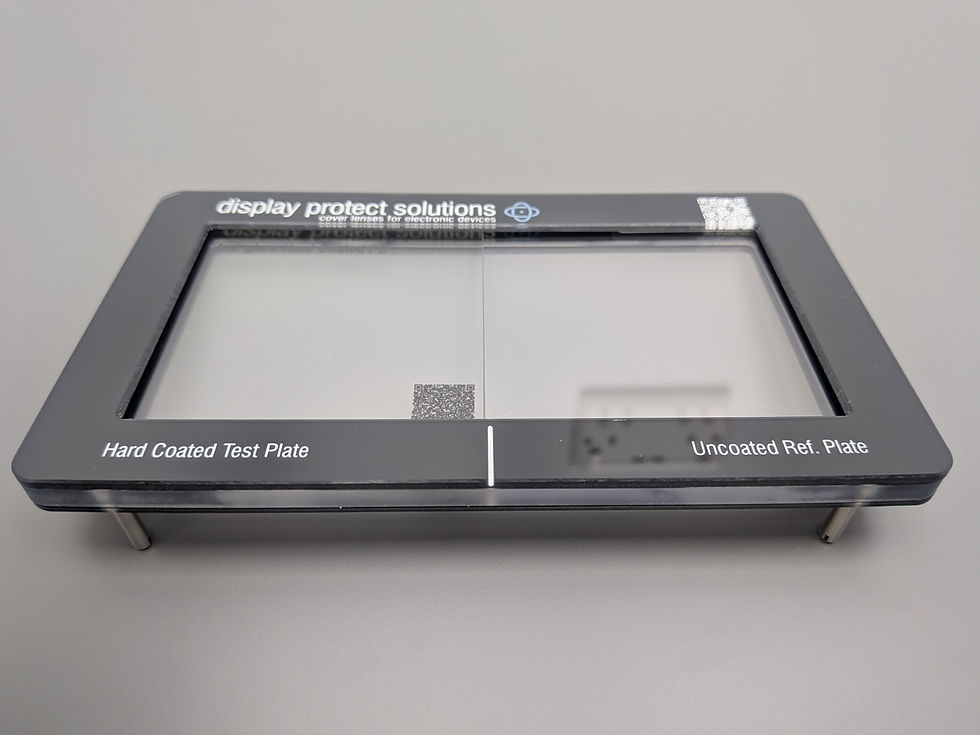
Requires hard coating for abrasion resistance
More sensitive to chemical exposure
UV stability depends on grade and coating
Surface durability depends on coating system
When polymer fails, it tends to crack or deform rather than shatter.
Optical Considerations
Glass typically offers:
Low intrinsic haze
Stable transmission
High surface durability without coating
Polymer offers:
Excellent clarity when hard coated
Easier integration of AG or ESD coatings
Potential yellowing if UV stability is not managed
With modern hard coat systems, coated polycarbonate can achieve performance close to glass for many industrial applications — but only with controlled processing.
Weight and Integration
Polymer is typically 40–50% lighter than glass at equivalent thickness.
In applications where:
Vibration exists
Weight reduction is important
Impact risk is high
Mounting stress is present
Polymer often reduces mechanical system risk.
Glass remains advantageous where:
Absolute scratch resistance is critical
High chemical exposure exists
Premium optical feel is required
What Suppliers Often Oversimplify
“Glass is stronger.” (Not under impact.)
“Polycarbonate scratches easily.” (Uncoated, yes. Properly coated, not necessarily.)
Ignoring edge strength.
Ignoring mounting stress.
Ignoring environmental ageing.
Not validating post-UV adhesion for coated polymers.
Material selection must align with validation standards — not assumptions.
Manufacturing and Process Control
Glass processing typically involves:
Cutting and edging
Tempering or chemical strengthening
Printing and surface treatments
Polymer processing may involve:
CNC machining
Hard coating (flow or spray)
Screen printing
Optical lamination
Adhesive bonding
Polymer introduces more process variables — but also more integration flexibility.
Controlled environments, coating thickness monitoring, and adhesion validation become critical.
Practical Takeaway
Before choosing polymer or glass, define:
Impact requirement (IK rating if applicable)
Environmental exposure (UV, humidity, chemicals)
Abrasion performance expectation
Weight constraints
Mounting method
Cost of field failure
Glass provides inherent surface durability. Polymer provides impact resilience and integration flexibility.
The correct material is determined by risk profile, not tradition.
Comments